
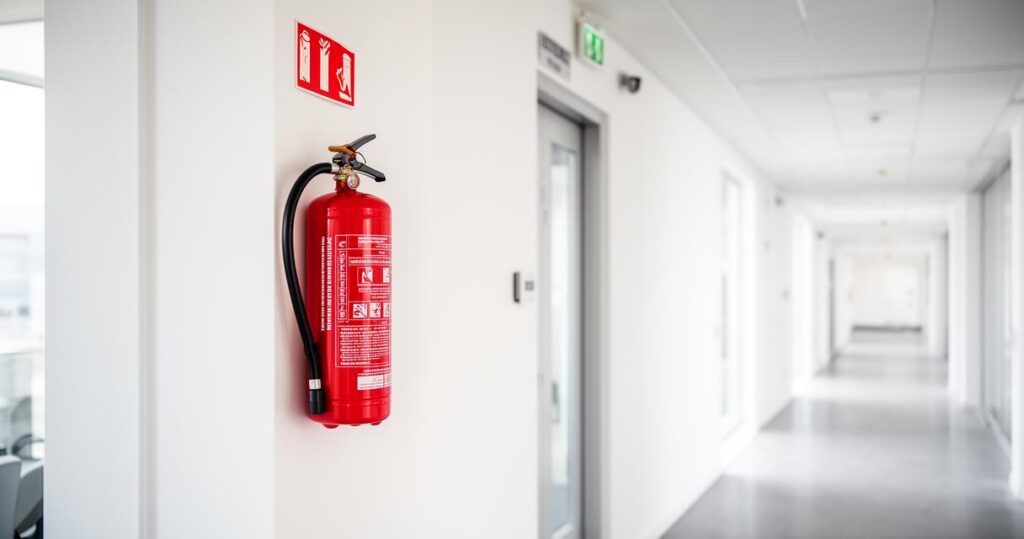
Fire extinguishers are one of those pieces of safety equipment that most people take for granted, until the moment they are actually needed. Whether you manage a busy office, run a small business, or simply want to ensure your home is properly protected, keeping your extinguishers in good working order is not something to leave to chance. A poorly maintained extinguisher can fail at the worst possible moment, turning a containable incident into a serious emergency. This step-by-step guide will walk you through everything you need to know about inspecting, understanding, and correctly positioning your fire protection equipment.
What to know
- Regular maintenance of fire extinguishers is crucial to ensure they function correctly during emergencies, as neglected devices can silently lose pressure or suffer from internal corrosion.
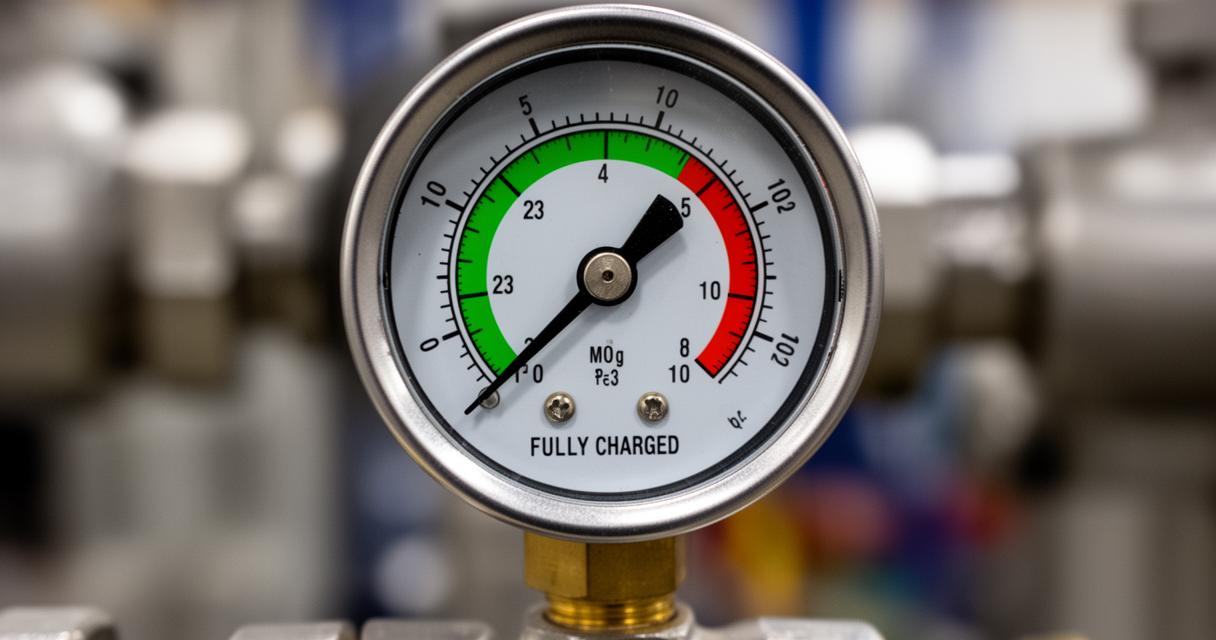
- Monthly DIY visual inspections should verify that the pressure gauge is in the green zone, the safety pin and seal are intact, and the device is free from physical damage or rust.
- Using the correct type of extinguisher (such as water, foam, CO2, or dry powder) is essential, as applying the wrong agent to a specific fire class can be ineffective or dangerous.
- UK regulations mandate that fire extinguishers undergo a thorough professional service by a qualified engineer at least once a year to ensure legal compliance and operational reliability.
- Extinguishers require extended internal testing every five to ten years and must be replaced entirely after 20 years to account for the natural degradation of materials.
- Effective placement involves installing extinguishers in visible, accessible locations with clear signage, ensuring they are not obstructed or stored in environments that could damage the unit.
- Maintaining a consistent record of inspection dates and service history is a critical practice for tracking equipment health and meeting regulatory requirements.
Why Regular Fire Extinguisher Checks Matter in Your Home or Workplace
The role fire extinguishers play in keeping people safe
Fire extinguishers are widely regarded as the first line of defence against fires, providing an immediate means of tackling a blaze before it has the chance to spread. In both domestic and commercial settings, having a functioning extinguisher close to hand can make the difference between a minor incident and a devastating loss of property, or worse, life. The importance of workplace fire safety cannot be overstated, and the extinguisher hanging quietly on the wall is often the centrepiece of that protection.
Yet simply having an extinguisher present is not sufficient. Regular fire extinguisher inspection is essential to confirm that the device will actually perform when called upon. Market data indicates that basic visual checks should be carried out every month, while a thorough examination by a qualified professional is required at least once a year. These are not arbitrary recommendations, they are rooted in the realities of how extinguishers age and lose their readiness over time.
How neglected extinguishers can let you down when it counts most
An extinguisher that has not been checked in months (or even years) may appear perfectly functional from the outside whilst being entirely unfit for use. Pressure can drop silently, seals can degrade, and internal components can corrode without any obvious external sign. When someone reaches for that device during a fire, there is simply no time to discover it is not working. Extinguisher maintenance is therefore not a bureaucratic exercise; it is a genuine safeguard against catastrophic failure.
Neglected equipment also creates legal exposure. UK law places clear duties on employers and landlords to ensure their fire safety equipment is kept in proper working order, and failing to do so can result in serious consequences. Beyond the legal dimension, the human cost of a preventable fire is incalculable. Regular checks are a small investment of time that pays enormous dividends in peace of mind.
Understanding the Different Types of Fire Extinguisher and Their Uses
Water, Foam, CO2 and Dry Powder: Knowing Which One to Reach For
Not all fire extinguishers are created equal, and reaching for the wrong type in an emergency can make a situation significantly worse. The four most common types found in UK buildings are water, foam, CO2 and dry powder, each designed to tackle specific classes of fire. Understanding the difference between them is a fundamental aspect of fire risk management and should be part of any workplace induction or home safety review.
Water extinguishers are suitable for Class A fires involving solid combustible materials such as wood, paper and textiles, but must never be used on electrical fires or burning liquids. Foam extinguishers are more versatile, covering Class A and Class B fires involving flammable liquids. CO2 extinguishers are the preferred choice for electrical equipment and are also effective on liquid fires, whilst dry powder extinguishers offer broad coverage across Classes A, B and C, though they can reduce visibility and cause breathing difficulties indoors.
Matching the Right Extinguisher to the Right Class of Fire
Choosing the correct extinguisher for the fire risks present in your environment is as important as having one at all. A kitchen with deep-fat fryers, for instance, requires a wet chemical extinguisher specifically rated for Class F fires, whereas a server room demands CO2 to avoid damaging electronic equipment. Ensuring the label on each device is legible and clearly identifies the type of extinguisher and the classes of fire it covers is a key part of any safety inspection checklist.
It is also worth noting that coverage areas matter. As a general principle, one appropriately rated extinguisher of a given size can cover a substantial floor area, and no one in a facility should need to travel more than 30 metres to reach one. Keeping this in mind when planning your layout will significantly improve your overall fire safety preparedness.
Your step-by-step diy visual inspection checklist
Checking the Exterior, Pin, Seal and Pressure Gauge
A monthly visual inspection can be carried out by any responsible person, provided they follow a consistent method and keep a written record of their findings. You do not need specialist training to perform this check, you simply need a clear process and the discipline to repeat it reliably each month. Here is what to look for:
- Confirm the extinguisher is in its designated location, clearly visible and immediately accessible.
- Check that the fire extinguisher pressure gauge needle is sitting firmly in the green zone, indicating the device is correctly pressurised.
- Verify that the safety pin is fully intact and that the tamper seal has not been broken or removed.
- Inspect the extinguisher service label to confirm the last service date and when the next one is due.
- Lift the extinguisher to get a sense of its weight, it should feel appropriately heavy, suggesting it is fully charged.
These steps take only a few minutes but provide a reliable snapshot of whether your extinguisher is in a serviceable condition. Recording the outcome of each check (whether on a paper log or a digital system) creates an audit trail that proves invaluable during annual servicing or any regulatory inspection.
Spotting Signs of Damage, Corrosion or Blockage That Need Attention
Alongside the gauge and seal checks, a thorough visual sweep of the extinguisher’s physical condition is essential. Corrective maintenance begins with identifying problems early, before they compromise the device entirely. Run your eye over the entire body of the extinguisher, paying particular attention to the following areas:
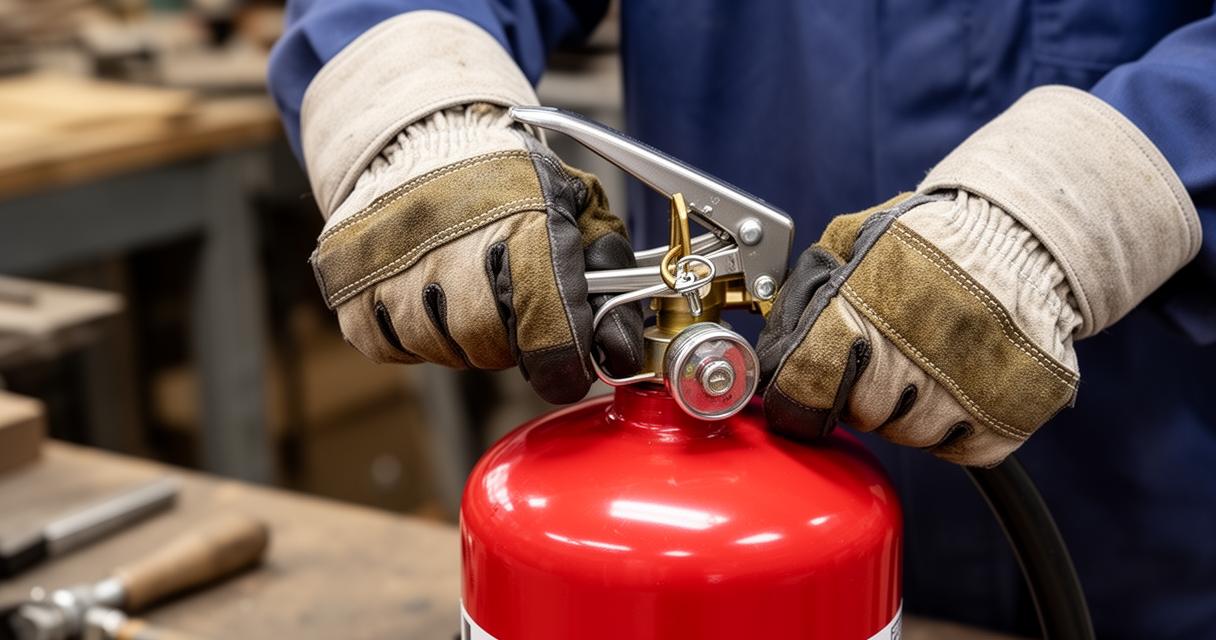
Look carefully at the cylinder itself for any dents, cracks, or signs of rust. A corroded or rusty extinguisher should never be trusted in an emergency and must be taken out of service immediately. Examine the hose and nozzle for blockages, splits, or brittleness, a blocked nozzle will prevent the extinguishing agent from being discharged effectively. Check the handle and trigger mechanism for any signs of damage or stiffness that might hinder operation under pressure. Finally, ensure the operating instructions printed on the body of the extinguisher remain fully legible; faded or obscured instructions are a hazard in themselves.
Any extinguisher that fails one or more of these checks should be tagged, removed from service, and referred to a qualified engineer before it is returned to its position. Do not attempt to repair or recharge an extinguisher yourself.
When a diy check is not enough: knowing your legal obligations
What UK Regulations Require of Businesses and Landlords
Whilst monthly visual inspections can be carried out in-house, they are no substitute for professional servicing. UK law requires employers to have their fire extinguishers serviced at least once a year by a person with appropriate qualifications, specifically, someone holding BAFE qualifications or an equivalent recognised standard. This is not optional; it is a legal requirement under fire safety regulations, and failure to comply can expose a business or landlord to significant liability.
The annual fire safety check performed by a qualified engineer goes far beyond what a visual inspection can achieve. It includes a detailed assessment of internal pressure, the condition of internal components, and a full functional test where appropriate. The engineer will also update the service label on each extinguisher and flag any units that require repair or replacement. Fire safety compliance depends on this professional layer of oversight, and it should be treated as a non-negotiable element of any fire safety management plan.
How often a qualified engineer should service your extinguishers
The annual service is just the starting point. Extended testing requirements mean that powder, water and foam extinguishers need to undergo more thorough internal examination every five years, whilst CO2 extinguishers are subject to this extended testing every ten years. After 20 years of service, extinguishers should be replaced entirely, regardless of how well maintained they appear. These intervals reflect the natural degradation of materials and components over time, and no amount of careful visual inspection can substitute for adherence to these timelines.
Extinguisher replacement is therefore a planned, predictable expense rather than a surprise. Keeping accurate records of each device (including its installation date, service history, and fire extinguisher tags) makes it straightforward to track when units are approaching the end of their serviceable life. Good record-keeping is not just good practice; in many cases it is a legal requirement that may be called upon during an inspection by the fire authority.
Storing and positioning your fire extinguishers correctly
Best Practices for Mounting, Signage and Accessibility
The effectiveness of a fire extinguisher is directly tied to how quickly it can be reached and deployed. Positioning is therefore a critical dimension of fire extinguisher accessibility, and there are well-established guidelines that should inform where and how devices are mounted. Wall-mounted extinguishers should be fixed at an appropriate height, high enough to avoid being knocked or damaged at floor level, but low enough to be reached comfortably by all users. For heavier units, the mounting height should be lower to allow safe removal without risk of injury.
Each extinguisher should be accompanied by clear, standardised signage that enables anyone (including visitors or new staff) to locate it instantly in an emergency. The area immediately around the device must remain clear at all times; a clearance zone of at least three feet should be maintained so that nothing obstructs access when seconds matter. These are not merely recommendations for tidiness, they are fire safety standards that form part of a broader duty of care.
Common placement mistakes that reduce your fire safety preparedness
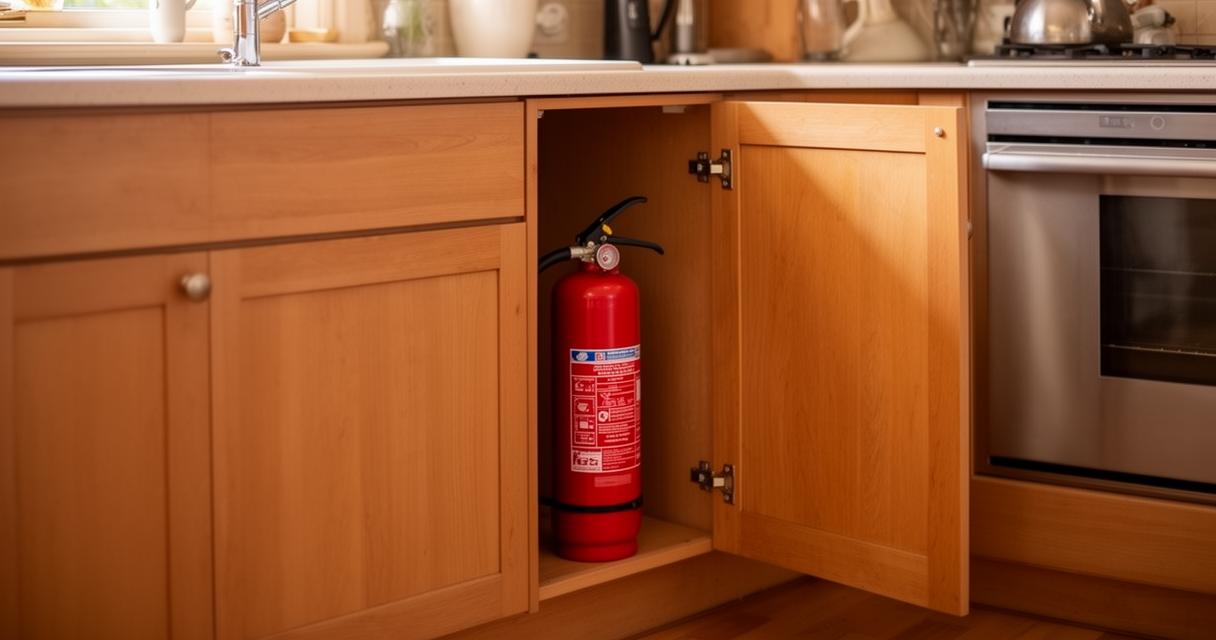
Even well-maintained extinguishers can be rendered effectively useless by poor placement. Some of the most frequent mistakes include positioning devices inside cupboards or behind doors where they are difficult to see, placing them too close to likely fire sources where heat could damage the unit before it can be used, and failing to account for the travel distances required in larger premises. In any sizeable facility, the layout should be planned so that no person needs to cover an excessive distance to reach the nearest device.
Another common error is mounting extinguishers in locations that are prone to extreme temperatures or moisture (such as unheated outbuildings or damp basements) without selecting equipment rated for those conditions. Exposure to cold, damp or corrosive atmospheres accelerates the degradation of seals and cylinders, shortening the effective service life of the device. Reviewing your placement strategy as part of your broader fire risk management approach will help to ensure your extinguishers remain in peak condition between services.
Ultimately, keeping your fire extinguishers in good working order is a continuous commitment rather than a one-off task. Monthly visual checks, annual professional servicing, correct placement and timely replacement together form a robust framework for fire safety compliance, one that protects not only property, but the people who live and work within it. Taking the time to follow a consistent inspection routine is one of the most straightforward and impactful steps any homeowner or business can take towards meaningful fire protection.